
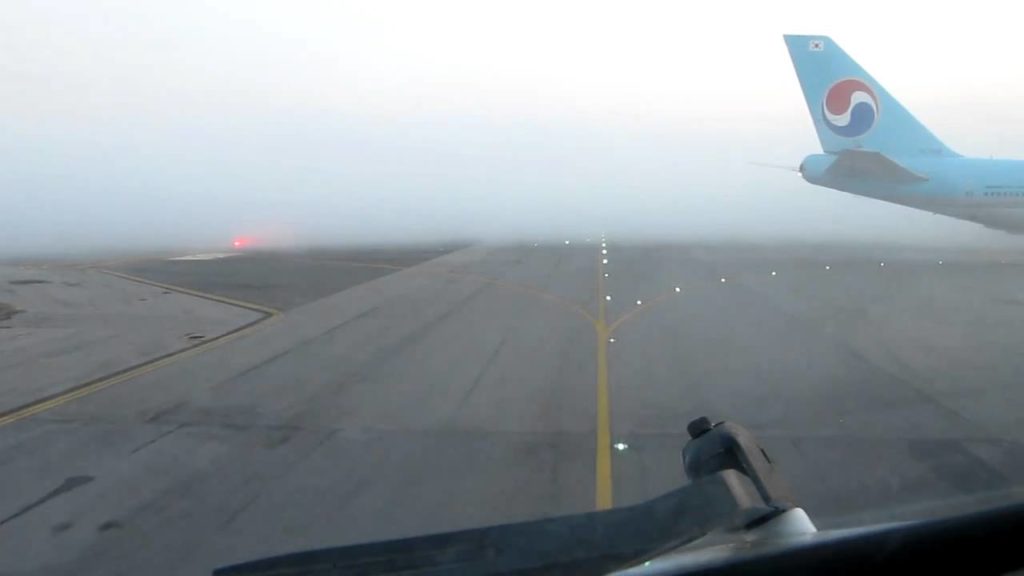
Wow. The taxi was more stressful to watch than the landing

What Is ILS CAT IIIB?
Instrument Landing System (ILS) Category IIIB (CAT IIIB) is a highly advanced technology used for autoland operations in conditions of extremely low visibility. It represents one of the highest categories within the ILS framework.
Autoland Capability
ILS CAT IIIB enables aircraft to perform autoland operations, meaning the entire landing process can be executed with minimal to no pilot intervention. This is especially crucial when visibility is severely limited due to factors like dense fog.
Key Components of ILS CAT IIIB
- Advanced Ground Equipment: ILS CAT IIIB relies on highly advanced ground-based equipment, including precision approach radar and transmitters. These systems provide real-time data to the aircraft.
- Onboard Autopilot Systems: Aircraft equipped for CAT IIIB autoland are fitted with sophisticated autopilot systems. These systems use data from the ground equipment to guide the aircraft safely to the runway.
- Redundancy and Fail-Safes: To ensure the utmost safety, CAT IIIB systems feature redundancy and fail-safe mechanisms. If any part of the system malfunctions, the aircraft is equipped to perform a missed approach and attempt the landing again or divert to an alternate airport.
Enhanced Aircraft Systems
Aircraft capable of CAT IIIB autoland are equipped with advanced systems that can handle low visibility situations. These systems include auto-throttles, auto-braking, and auto-steering, allowing for a seamless autoland procedure.
Challenges of Low Visibility Taxi
Transitioning from Runway to Taxiway
Once the aircraft has successfully autolanded, the next challenge is low visibility taxi. Transitioning from the runway to the taxiway can be challenging when fog severely limits visibility. To address this, airports employ a variety of tools and procedures:
- High-Intensity Centerline Lights: These lights, embedded in the taxiway, guide the aircraft along the correct path. They are especially crucial in low visibility conditions.
- Advanced Surface Movement Guidance and Control System (A-SMGCS): This technology provides real-time surveillance of aircraft and ground vehicles on the airport surface. It assists in preventing runway incursions and helps navigate the aircraft during low visibility taxi.
- Taxiway Centerline Lights: These lights supplement the high-intensity centerline lights, further assisting pilots in maintaining the correct taxi route.
- Enhanced Cockpit Displays: Aircraft are equipped with advanced cockpit displays that provide detailed information about the aircraft’s position on the ground.
Training and Certification
Pilots and ground personnel undergo rigorous training to operate in low visibility conditions. The use of flight simulators, specialized ground training, and real-world experience is essential for ensuring safe operations during heavy fog.
Conclusion
ILS CAT IIIB autoland and low visibility taxi procedures are a testament to the aviation industry’s commitment to safety and efficiency. These systems and technologies ensure that aircraft can land and taxi safely, even in the most challenging weather conditions, ultimately minimizing disruptions to air travel due to heavy fog and low visibility.